IBAO · 1 Naples, Italy

Hotel: Royal Continental Napoli, Naples

Organized by: International Behavior Analysis Organization
This is the first IBAO International Conference! We are bringing together highly influential behavior analysts from 10 different countries around the world. The IBAO 1 conference in Naples, Italy will include 3 amazing pre-conference workshops and two FULL days of insightful and thought-provoking panels, symposia, paper presentations, posters, and social events!

Pre-Conference Workshops

Workshop 1: Workshop Test
by Ajamu Nkosi
 16 Spots available
Workshop Test Description
See more €250
€250

Workshop 2: Assessment and Treatment of Feeding Problems in Children: Developing A Starting Point for Treatment Using an Intensive Home-based Approach
by Meeta R. Patel
40 Spots available
Children with feeding difficulties often face a range of challenges related to eating and drinking. For example, some children may exhibit significant behavioral issues (such as crying, aggression, or self-injury) when presented with any food or liquid, which can eventually lead to tube dependency. Other children may only demonstrate problem behaviors in response to specific foods or liquids—such as selectivity based on type, texture, or presentation format—resulting in nutritional deficiencies and potential social stigma. Additionally, some children may eat a variety of foods but in limited quantities, which can lead to poor weight gain. These feeding challenges are typically addressed by a single professional or a multidisciplinary team that may include a pediatric gastroenterologist, occupational or speech therapist, nutritionist, and/or behavioral psychologist/behavior analyst. Treatment options can take place in a clinic, hospital, or home setting. The goal of this workshop is to provide an overview of the assessment and treatment of feeding problems in children, including avoidant/restrictive food intake disorder (ARFID), using an intensive home-based model. More specifically, this workshop will highlight how clinicians can determine the starting point for treatment based on the type of feeding problem. This session is designed to help clinicians and researchers understand how feeding assessment and treatment can begin in less controlled environments, offering insights on determining the best starting point for treatment. Additionally, video recordings will be shown, illustrating a patient's journey from the start of treatment to discharge. Learning Objectives Teach the audience how treatment can be implemented using an intensive interdisciplinary home-based model for children with a variety of feeding problems, including ARFID. Understand how to develop a starting point for treatment and how success is measured. Teach the audience how caregivers are trained to implement the treatment plan in our absence. Learn how to systematically provide recommendations for caregivers and school personnel to utilize in all environments. References Patel, M. R. , Patel, V. Y., Andersen, A. S., & Miles, A. (2022). Evaluating Outcome Measure Data for an Intensive Interdisciplinary Home-Based Pediatric Feeding Disorders Program. Nutrients , 14 (21), 4602. https://doi.org/10.3390/nu14214602 Berth, D. P., Bachmeyer, M. H., Kirkwood, C. A., Mauzy, C. R., 4th, Retzlaff, B. J., & Gibson, A. L. (2019). Noncontingent and differential reinforcement in the treatment of pediatric feeding problems. Journal of Applied Behavior Analysis , 52 (3), 622–641. https://doi.org/10.1002/jaba.562 Andersen, A. S., & Patel, M. R. (2023). Evaluating a Treatment Package for Avoidant/Restrictive Food Intake Disorder to Increase Food Variety. Behavior analysis in practice , 17 (1), 176–188. https://doi.org/10.1007/s40617-023-00821-0 Kozlowski, A. M., Clark, R., Workman, B., Chumney, K., & Birmingham, T. (2024). Utensil Fading to Increase Appropriate Utensil Acceptance. Behavior analysis in practice , 17 (3), 893–907. https://doi.org/10.1007/s40617-024-00911-7 Patel, M. R., Andersen, A. S., & Patel, V. Y. (2024). A preliminary assessment to determine the starting point for treatment of pediatric feeding disorders. Journal of developmental and physical disabilities , 1-19. https://doi.org/10.1007/s10882-024-09980-6
See more
€100

Workshop 3: Ethically Responding in the Presence of Sexual and/or Socio-Sexual Behaviors
by Nicholas Maio-Aether
39 Spots available
What do you do when sexual behaviors, or socio-sexual behaviors (such as flirting or harassing, dating, et cetera), arise on your caseload? How do you handle such in a way that is aligned with behavior-analytic best practices, as well as the IBAO Code of Ethics and local laws? How do you navigate new situations without causing harm, acting instead as a force for beneficence? This workshop will give attendees a very practical overview of the history of behavior-analytic applications toward sexuality and then will delve into applications of an ethical decision-making framework by which clinicians can ensure they are meeting needs in the moment, planning effectively for the future, and aware of when and how to get additional resources or help. A unique element of this workshop is that all attendees will work together to discern how they may respond in a multitude of hypotheticals based in the presenter's own practice history; their suggested responses will be compared against what really occurred and feedback can be given by an expert who has lived these scenarios. While this won't result in attendees being sexologists by any means, it will provide a powerful exposure to this relevant area of human needs and clinical services.
See more
€100

Workshop 4: Teaching Safety Skills to Children with Autism Spectrum Disorder
by Elif Tekin Iftar
40 Spots available
“Safety skills” is an umbrella term consisting of a wide variety of skills. Research has shown that all children have the risk of being injured perhaps fatally because of the intentional and unintentional accidents. Children with autism spectrum disorder face two or three times the risk of injury or abuse compared with those of their same age peers. Ensuring children’s safety is, and should always be, a concern for parents, teachers, and society. However, it is well-documented that teaching safety skills to children with autism spectrum disorder is often neglected both clinically and experimentally. In a relatively new study, it is indicated that (a) although parents and teachers found safety skills instruction important and necessary, they use natural occurrences as teaching opportunities and prevention behaviors rather than providing systematic instruction and (b) neither parents nor teachers have enough knowledge and experience for teaching safety skills (Sirin & Tekin-Iftar, 2016). However, research has shown that when taught systematically, children with autism spectrum disorder could acquire safety skills and perform them over time and across persons and settings. During this workshop the strategies for assessing and teaching safety skills to children with autism spectrum disorder will be presented based on the author’s research over the past 20 years. Topics will include the important of assessment, implementing in situ assessments, taking data-based decision during safety skill instruction, three teaching strategies (i.e., behavioral skills training, simultaneous prompting procedure, and video modelling) for teaching safety skills, promoting generalization and maintenance of safety teaching, and ethical aspects of safety skills teaching. Identifying and defining safety threats appropriate to the child’s level and environment will be shared. I addition to that, I will discuss how to conduct in-situ assessment of safety skills in home, school, and other community setting. Attendees will learn how to design and conduct instruction with behavioral skills training, simultaneous prompting procedure, and video modeling. They will also learn how to design and conduct in situ training to promote generalization and maintenance. The Instruction level of presentation: Intermediate Learning Objectives: At the conclusion of the workshop, participants will be able to: (1) describe in situ assessment and in situ teaching; (2) identify three instructional procedures (i.e., behavioral skills training, simultaneous prompting procedure, and video modelling) for teaching safety skills to children with autism spectrum disorder; (3) develop safety skills instruction plans (including generalization and maintenance of the targeted safety skills) by using the three instructional procedures that will be shared during workshop. The target audience of presentation: Behavior analysts Psychologists Special education teachers Graduate students
See more
€100
Event Program
The International Behavior Analysis Organization conference brings together the world’s leading experts, practitioners, and researchers to explore the latest advances in Applied Behavior Analysis and behavioral health. Designed for Behavior Analysts, Behavior Therapists and Technicians, Educators, Psychologists, Parents and other healthcare professionals. This event offers an unparalleled opportunity to learn, meet, connect, and collaborate!
See the ProgramFeatured Speakers
Elif Tekin Iftar
Ph.D., IBA


Giovambattista Presti
Ph.D., M.D., Psychotherapist, Behavior Analyst

Alessandro Dibari
Psychologist, BCBA, IBA

Niccolò Varruccio
Psychologist, Psychotherapist, IBA, BCBA


Michael M. Mueller
Ph.D., BCBA-D, IBA

Chiara Pezzana
MD, Behavior Analyst

Luigi Iovino
Psychologist and Psychotherapist, BCBA

Alessandro Frolli
MD, Behavior Analyst
Our Supporters
We are honored to recognize the organizations and industry leaders whose generous support makes the IBT & IBA Global Event possible. Their commitment to advancing the field of behavior analysis, education, and research helps us create a space where innovation, collaboration, and professional growth can thrive.
Sponsorship OpportunitiesCommittee
The Scientific Committee is responsible for ensuring the academic rigor, integrity, and quality of all conference content. This team of distinguished experts oversees the review of abstracts, evaluates research submissions, and guides the development of scientific sessions.

Ajamu Nkosi
Ph.D., IBA, BCBA-D
Alessandro Dibari
Psychologist, BCBA, IBA
Francesca degli Espinosa
Ph.D., BCBA-D, Cpsychol
Michael M. Mueller
Ph.D., BCBA-D, IBA
Valeria Pascale
Psychologist, Ph.D. Candidate ABA, IBA, PAB IBAO
Posters
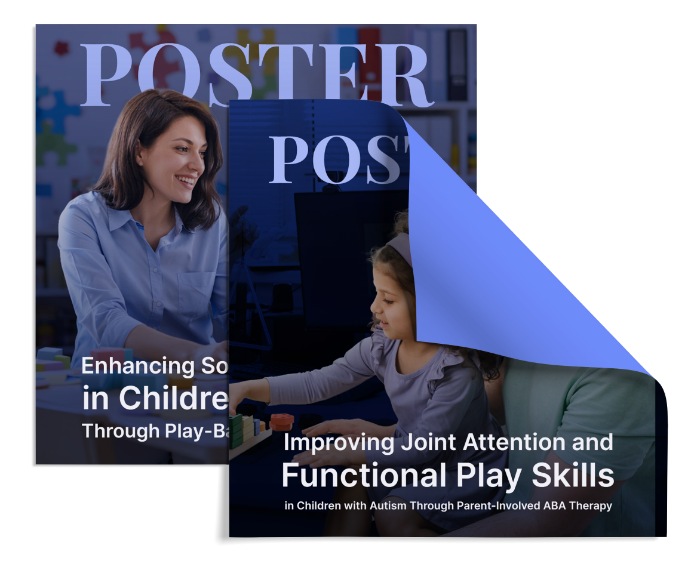
IBAO invites researchers, clinicians, educators, supervisors, and students to submit proposals for poster presentations for the first IBAO International Conference, taking place in Naples, Italy (October 2–4, 2026). This inaugural conference will convene an international community to share high-quality work that advances Applied Behavior Analysis (ABA) research, clinical practice, training, and dissemination.
Submissions closed: June 14, 2026
The submission window has closed.